All Categories
Featured
Table of Contents
- – The Shift Towards Proximity Intelligence in 2026
- – The Role of AI Browse Optimization (AEO) in Re...
- – Information Consistency and Entity Authority T...
- – The Development of Regional Social Signals and...
- – Technical Hygiene for Proximity Browse Optimiz...
- – Future-Proofing Local Presence for 2027 and Be...
The Shift Towards Proximity Intelligence in 2026
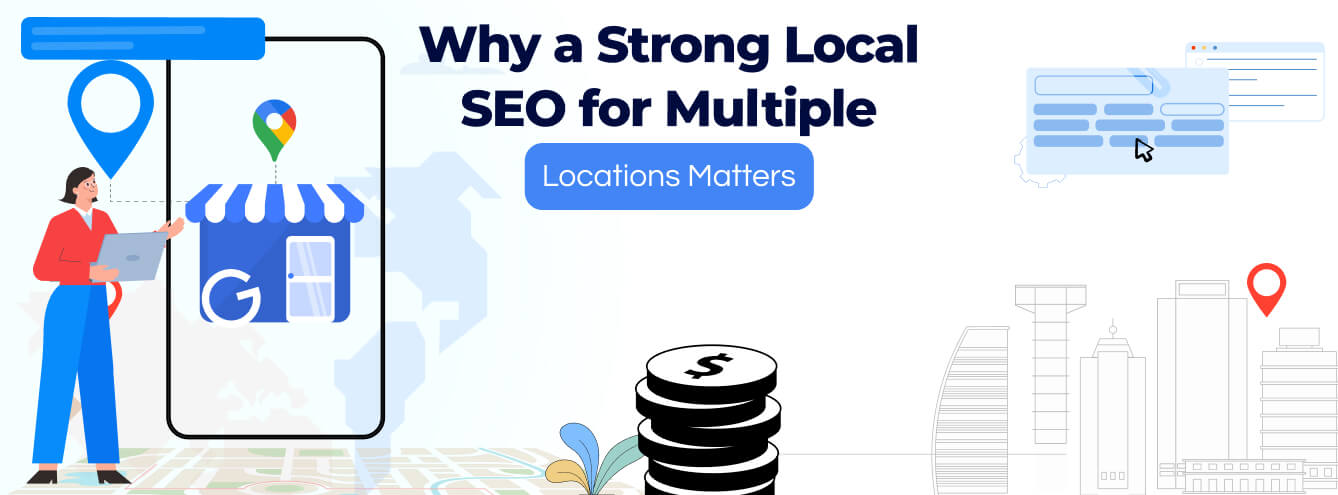
Local search has moved far beyond the period of fixed service listings. In 2026, the digital environment for services in major metropolitan areas is specified by hyper-local proximity search optimization. Browse engines have replaced standard directory results with advanced AI agents that focus on real-time data, physical range, and validated entity authority. For companies handling lots or numerous places, the old methods of bulk uploading spreadsheets no longer are adequate. Preserving an existence in the surrounding region requires an integrated approach to Google Business Profile (GBP) management that treats each storefront as a special, data-rich entity.
Customer behavior has transitioned from broad intent to immediate satisfaction. A user in the local market does not simply search for a company-- they engage with an AI-driven user interface that forecasts their requirements based upon current location, previous choices, and live availability. This change indicates that proximity is no longer practically a postal code. It is about the capability of an organization to indicate its importance to the search engine in the precise minute a query is made. Lots of organizations now invest greatly in Regional Marketing Hubs to ensure their digital footprint matches their physical truth across every area they serve.
The Role of AI Browse Optimization (AEO) in Regional Markets
As online search engine lean into Generative Engine Optimization (GEO) and AI Browse Optimization (AEO), the structure of a GBP listing has ended up being the foundation for how AI models view a brand name. Steve Morris, CEO of NEWMEDIA.COM, has actually regularly observed in 2026 market panels that "the profile is the curriculum the AI uses to learn more about your business." NEWMEDIA.COM, which operates from centers like Denver, Nashville, and New York City, has actually seen a shift where online search engine focus on companies that offer granular, location-specific material. This goes beyond address and telephone number. It includes localized service descriptions, neighborhood-specific updates, and high-resolution images that reflects the specific character of a branch in the local community.
To manage this intricacy, brand names are moving far from manual updates. Strategic Regional Marketing Hubs has ended up being vital for contemporary businesses that require to scale their exposure without losing the nuance of local engagement. Platforms like RankOS provide the infrastructure to manage these signals at scale, making sure that a shop in its respective city preserves the exact same data integrity as a flagship location in Los Angeles or Miami. The objective is to feed the AI search agents a constant stream of confirmed realities that confirm the company is the most relevant answer for a neighboring user.
Information Consistency and Entity Authority Throughout the Region
One of the most significant difficulties in 2026 is preserving entity authority. Google now tries to find proving proof across the web to verify the details found on a GBP. If a company listing in the metro area claims particular hours or services, but third-party platforms, social networks, or the business's own website recommend otherwise, the AI may bench that area in proximity outcomes. This is particularly tough for multi-location brands where regional managers may take liberties with their specific branch's online existence.
Centralized management with local versatility is the requirement for 2026. Companies looking for Marketing Hubs throughout North America discover that the most successful strategies include a "center and spoke" model. The main marketing team sets the brand name requirements and technical SEO criteria, while AI tools or regional groups provide the hyper-local context that browse engines crave. This may include publishing about a regional occasion in the local area or responding to reviews with particular discusses of regional landmarks and area requirements. This level of information verifies to browse algorithms that business is an active, integrated part of the local community.

The Development of Regional Social Signals and Reviews
Reviews have constantly mattered, but in 2026, their role in distance search has changed. AI representatives now "read" and synthesize review content to respond to intricate natural language questions. A searcher might ask their device to "find a place nearby with a quiet atmosphere and quick Wi-Fi that is open past 9 PM." The AI does not just try to find the "Wi-Fi" keyword; it analyzes the sentiment and specific points out in recent evaluations for an area in the urban center.
Reliable GBP management now involves a technique for creating premium, detailed feedback from customers in the local region. Organizations should motivate patrons to be specific in their praise. An evaluation that discusses a specific service or a special feature of the local branch brings significantly more weight in the 2026 distance algorithm than a generic first-class score. These signals serve as a trust layer, validating the claims made by the service in its main profile. NEWMEDIA.COM highlights that this "social proof" is a primary aspect in the RankOS exposure scores for multi-location clients.
Technical Hygiene for Proximity Browse Optimization
Technical aspects of GBP management in 2026 need constant monitoring. Attributes that were when optional, such as live stock integration and real-time wait times, are now expected. For a retail brand name in the surrounding territory, having a GBP that displays actual stock levels can be the difference between a click and a skip. Google's AI focuses on "inventory-aware" listings due to the fact that they offer a better user experience, lowering the likelihood that a consumer travels to a store only to find an item out of stock.
Secondary categories and characteristics must likewise be carefully handled. As search becomes more conversational, users are searching for particular details like "wheelchair available entryway" or "pet-friendly seating." In 2026, these are not simply checkboxes but important information points that figure out whether an area appears in a filtered AI response. Brands should ensure that every area in the local market has these attributes filled out and routinely updated to reflect any modifications in the physical area.
Future-Proofing Local Presence for 2027 and Beyond
As we move through 2026, the combination of augmented truth (AR) and wearable innovation is more influencing proximity search. A pedestrian strolling through a busy downtown area might see service info overlaid on their vision through AR glasses. This data is pulled straight from the GBP. If the information is unreliable or the profile is badly enhanced, the business becomes unnoticeable in this brand-new layer of truth. Steve Morris and the team at NEWMEDIA.COM highlight that the work done today in the region to clean up and improve local data is a financial investment in the next stage of digital interaction.
The shift towards a fully AI-mediated search experience implies that the "top 3" map pack has actually developed into the "single best answer" or a curated "top choice" list. Just organizations that have mastered the subtleties of multi-location management and distance optimization will remain competitive. Success needs a mix of technical precision, local credibility, and making use of advanced platforms to handle the massive volume of information created by a contemporary business. Whether operating in Dallas, Atlanta, or the local market, the focus must remain on providing online search engine with the most accurate, timely, and appropriate details possible to serve the immediate requirements of the regional consumer in this nation.

Table of Contents
- – The Shift Towards Proximity Intelligence in 2026
- – The Role of AI Browse Optimization (AEO) in Re...
- – Information Consistency and Entity Authority T...
- – The Development of Regional Social Signals and...
- – Technical Hygiene for Proximity Browse Optimiz...
- – Future-Proofing Local Presence for 2027 and Be...
Latest Posts
How to Audit Your Local Presence for 2026
Will Your Digital Strategy Ready for AI Search
Mastering Your Regional SEO Checklist for 2026
More
Latest Posts
How to Audit Your Local Presence for 2026
Will Your Digital Strategy Ready for AI Search
Mastering Your Regional SEO Checklist for 2026